Why Does My Car Make a Hollow Knock When Driving Over Small Bumps?
A shallow crack in the pavement produces a hollow knock, but a larger speed bump barely makes a sound. The car steers normally, and nothing looks loose when you walk around it. That combination can make the noise especially difficult to explain.
Start with the circumstances rather than naming a part. Does it happen when one wheel crosses an uneven edge, when both wheels rise together, or when the body rocks after braking? Small changes in loading can reveal movement that a quiet car on a stationary lift won't show.
Rule Out Loose Items That Echo Through the Body
A spare tire, jack, cargo-floor panel, or seat latch can create a hollow sound that seems to come from underneath. An unsecured item doesn't have to be large to resonate through an empty storage area. The sound can change when the trunk is full because the added cargo prevents the item from moving.
Remove loose belongings and check the intended retaining hardware while the car is parked. Don't assume the noise is harmless if it doesn't go away. Exhaust hangers, underbody shields, and suspension mounts also transmit sound through the body. At our shop, we confirm where the knock originates before deciding whether it comes from the suspension or something carried by the car.
One-Wheel Bumps Load the Sway Bar Differently
The sway bar reacts when the wheels on an axle move relative to each other. A shallow uneven patch can repeatedly work its links and mounting bushings, while a broad speed bump taken squarely loads them differently.
Wear in a link joint or mounting bushing can allow a quick knock each time the load reverses. A link under tension can feel tight during one check, so the test needs the appropriate suspension position. Visible rubber damage provides context, but the actual loose movement identifies the repair.
A Strut or Shock Mount Can Amplify a Small Knock
A loose or deteriorated mount allows movement where the damper attaches to the body or suspension. Sheet metal can amplify that movement into the hollow knock heard inside. The damper itself might still control the ride well enough that the owner notices sound before any bouncing.
Upper strut bearings, mounting plates, and spring seats also deserve attention. A spring that shifts against its seat can make noise during both steering and bumps. Replacing a complete strut without checking its mounts and seating can leave the complaint unresolved. Installation hardware and torque also need checking when the knock started after recent suspension work.
A Bushing Can Shift When the Load Reverses
Control arm bushings must cushion movement while keeping the wheel located. When rubber separates from its sleeve, the arm can move farther than intended and knock against its limits. The same vehicle might thump during braking, pulling away, or crossing a shallow driveway edge because each event changes the direction of force.
We look for excessive displacement rather than condemn every cracked surface. Some bushings have designed voids and visible movement during normal operation. A wheel shifting under braking or a sleeve moving independently of the rubber is more meaningful. Rear links and subframe mounts can create similar effects, even when the sound seems to be coming from a front footwell.
Brake Hardware Can Imitate Suspension Noise
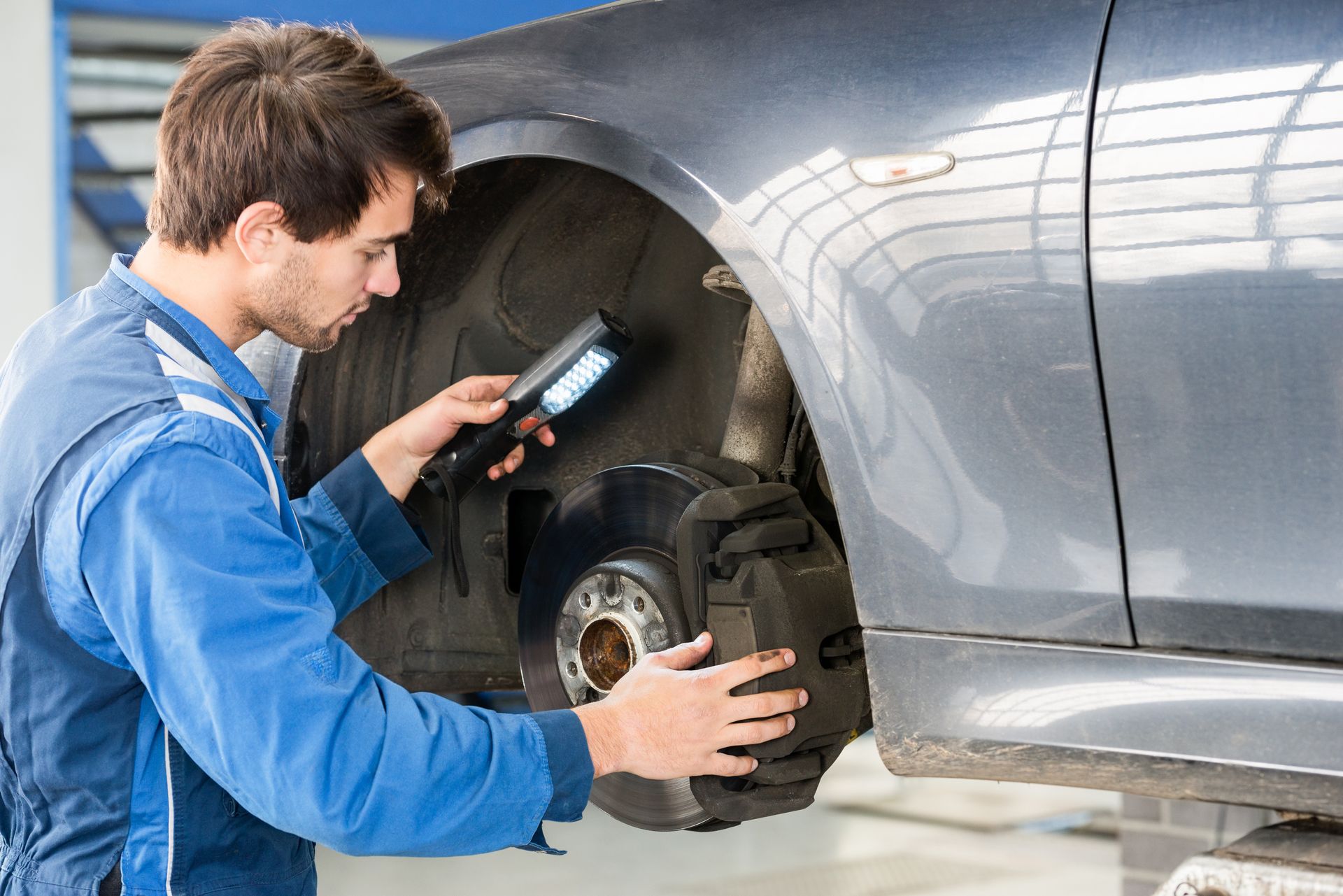
Pads, clips, and caliper hardware can move when a wheel crosses broken pavement. A missing clip or unsuitable fit can produce a light knock with otherwise normal braking. If the sound began after brake service, include that history in the diagnosis rather than treating it as unrelated because the noise happens off the pedal.
During a controlled road test, a technician can check whether light brake application changes the sound over the same surface. A change points to brake hardware but doesn't prove the source on its own. Loose caliper fasteners are more serious than a minor pad-fit noise. The assembly needs examination before you judge the vehicle safe to keep driving.
Reproduce the Sound Without Chasing the Loudest Part
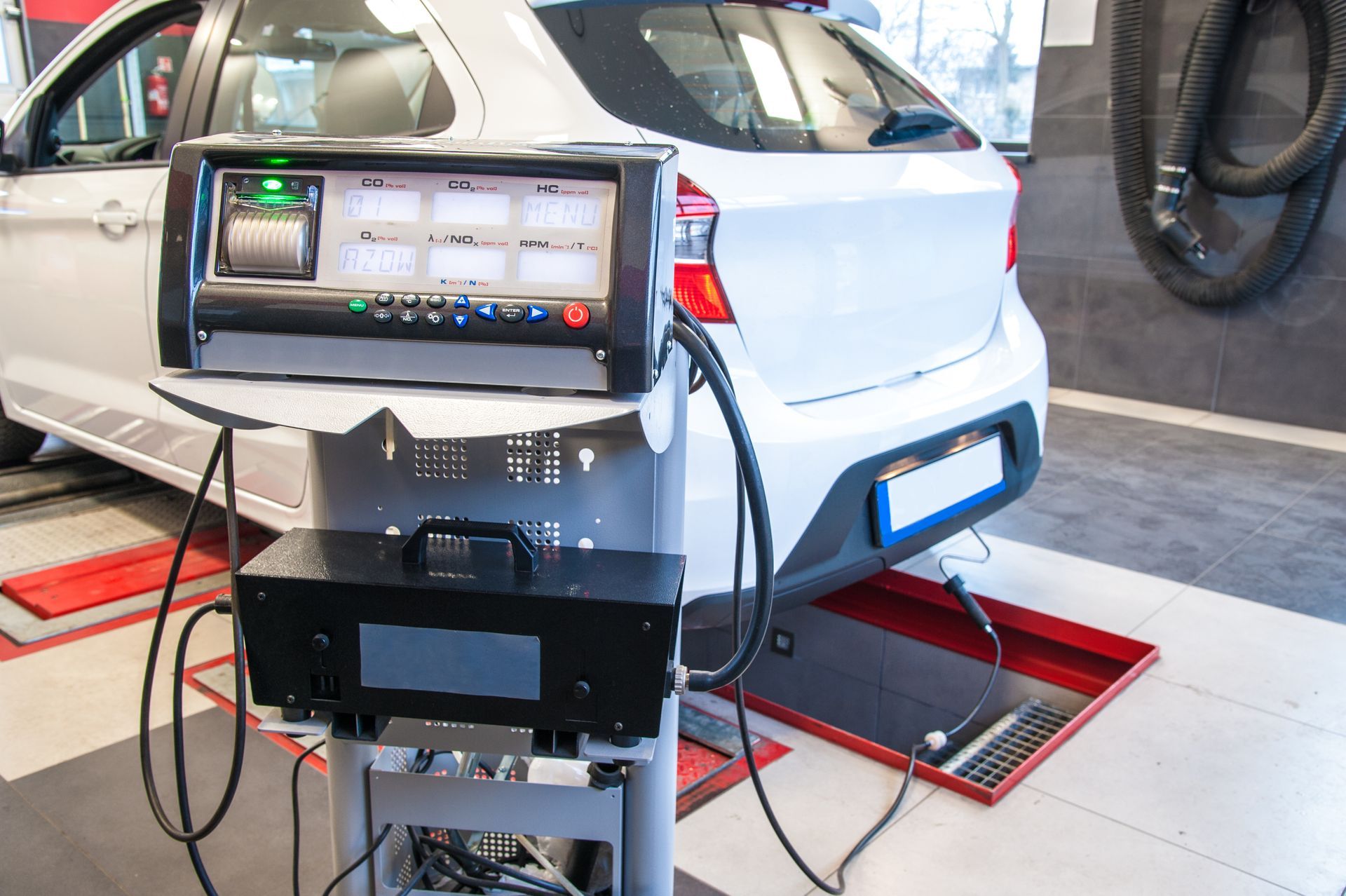
The inspection needs road testing and checks with the suspension supported correctly. Electronic listening equipment can help separate a noise transmitted through the structure from one generated at that location. Also consider ball joints, tie rods, and wheel bearings if the knock comes with play or changes in handling.
Tell the shop whether passengers, braking, temperature, or turning affect it. Record earlier suspension work and regular maintenance notes so you don't overlook recently disturbed hardware. Avoid deliberately striking potholes to make the sound louder. If the car wanders, a wheel looks displaced, or steering response changes, seek help rather than keep driving while you wait for the noise to become easier to identify.
Get Suspension Noise Diagnostics In Jurupa Valley, CA, With D&S Automotive
D&S Automotive in Jurupa Valley, CA, can trace a hollow knock through the suspension, brakes, mounts, and body attachments. Describe the smallest road feature that reliably produces it.
Contact us to schedule a noise assessment and check what is moving before parts are replaced.